Home › Slow Burn Romance › Historical Romance
Slow Burn Historical Romance Books
Regency Rules, Victorian Secrets, Marriage Deals, Social Risk, and Love That Takes Its Time
Slow burn historical romance makes every step toward love consequential. Reputation, inheritance, class, family duty, race, gender expectations, war, and the rules of a particular period can make a private feeling a public risk. The characters do not simply need to admit attraction; they need to decide what they are willing to lose—or remake—to choose each other.
That is why ordinary devices become powerful. A gloved hand held too long, a letter hidden in a desk, a dance that breaks a family expectation. Modern characters can text, travel, resign or change jobs; historical characters may need a chaperone, an inheritance, a safe marriage or an entire community to change before they can choose love openly.
This list is romance-first. Every pick centers a couple and is chosen for a gradual emotional build, across Regency, Georgian, Victorian, Edwardian, Gilded Age and mid-century settings, with M/F, sapphic and M/M romance. Each lists burn speed, heat and ending.
Quick start
Start Here: Choose Your Historical Slow Burn
| If you want… | Start with… | Why it fits |
|---|---|---|
| Classic restrained longing | Pride and Prejudice — Jane Austen | Misunderstanding, class and the original slow burn |
| Marriage of convenience with patient intimacy | A Civil Contract — Georgette Heyer | Practical marriage becomes emotional understanding |
| Friends-to-lovers tenderness | Just Like Heaven — Julia Quinn | Long acquaintance and a patient realization |
| A landmark of the genre | Flowers from the Storm — Laura Kinsale | A duke, a brain injury and a Quaker woman who understands him |
| Suffrage politics and a powerful duke | Bringing Down the Duke — Evie Dunmore | Class difference, debate and gradual respect |
| Sapphic Regency yearning | The Lady’s Guide to Celestial Mechanics — Olivia Waite | Women in science, class difference, F/F |
| Edwardian magic and M/M romance | A Marvellous Light — Freya Marske | A curse, a conspiracy and a prickly magician |
| Reunion and identity | A Lady for a Duke — Alexis Hall | A trans heroine and the friend who mourned her |
What Makes Historical Slow Burn Different?
Historical romance uses the period’s structures as real romantic obstacles. A title, a dowry, a forbidden occupation, a military posting, a dangerous secret, a marriage contract, or a difference in rank can determine whether a relationship is possible. The strongest stories make those constraints specific while still allowing the characters agency and a satisfying resolution.
Slow burn works especially well when desire arrives before certainty. The characters may respect each other’s intelligence, form a private friendship, collaborate on a cause, or enter a practical arrangement long before they believe a future together can exist. The eventual declaration matters because the story has shown the cost of waiting.
The Best Historical Slow Burn Setups
| Setup | Why it works | Try |
|---|---|---|
| Marriage of convenience | A practical agreement gives intimacy time to become voluntary commitment. | A Civil Contract; Slightly Married |
| Class difference | Social risk turns respect and attraction into a choice with consequences. | North and South; The Siren of Sussex |
| Friends to lovers | Long acquaintance lets feeling emerge through shared history. | Just Like Heaven; We Could Be So Good |
| Second chance | Past attachment meets changed circumstances and unresolved hurt. | Persuasion; A Lady for a Duke |
| Political or reform work | Shared purpose reveals values before attraction becomes explicit. | Bringing Down the Duke; The Care and Feeding of Waspish Widows |
| Mystery or magic | External danger forces cooperation without displacing the romance. | A Marvellous Light; An Unseen Attraction |
The list
Our Slow Burn Historical Romance Picks

1. Pride and Prejudice — Jane Austen
Burn: Slow · Heat: Closed door · Ending: HEA
Type: Regency classic · Tropes: enemies-to-lovers, class difference, misunderstanding
Elizabeth Bennet and Fitzwilliam Darcy begin with assumptions, pride and social judgment. Their relationship develops through self-knowledge and changed behavior — the foundational slow burn for readers who love sharp dialogue and earned respect.

2. Persuasion — Jane Austen
Burn: Slow · Heat: Closed door · Ending: HEA
Type: Regency classic · Tropes: second chance, letters, long separation
Anne Elliot and Captain Wentworth meet again eight years after she was persuaded to break their engagement. The tension comes from restraint, regret and one of the most famous letters in romance.
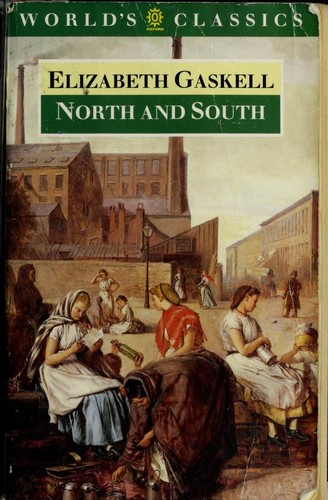
3. North and South — Elizabeth Gaskell
Burn: Very slow · Heat: Closed door · Ending: HEA
Type: Victorian classic · Tropes: class difference, industrial town, enemies-to-lovers
Margaret Hale and mill owner John Thornton disagree about class, labor and personal values before they can recognize mutual respect. For readers who want social issues and a very patient emotional shift.

4. Jane Eyre — Charlotte Brontë
Burn: Slow · Heat: Closed door · Ending: HEA
Type: Victorian gothic classic · Tropes: governess, class difference, secrets
Jane’s relationship with Rochester grows through conversation, secrecy and unequal social position. Gothic as much as romance: expect darkness and ethical complications on the way to the resolution.

5. A Civil Contract — Georgette Heyer
Burn: Very slow · Heat: Closed door · Ending: HEA
Type: Regency romance · Tropes: marriage of convenience, class difference, emotional maturity
A debt-ridden aristocrat marries a wealthy merchant’s plain daughter to save his estate. The relationship is built through everyday consideration and hard truths — an unglamorous but deeply satisfying movement toward love.

6. Venetia — Georgette Heyer
Burn: Slow · Heat: Closed door · Ending: HEA
Type: Regency romance · Tropes: independent heroine, rake, country setting
A sheltered but sharp-witted woman meets her notorious neighbor and gradually sees past his reputation. Witty restraint and a relationship built on conversation and recognition.

7. Frederica — Georgette Heyer
Burn: Slow · Heat: Closed door · Ending: HEA
Type: Regency romance · Tropes: family chaos, reluctant guardian, slow courtship
A capable woman brings her younger siblings to London and enlists a bored, wealthy distant relative to help launch her sister. The romance builds through practical partnership and constant family emergencies.

8. The Duke and I — Julia Quinn
Burn: Gentle · Heat: Open door · Ending: HEA
Type: Regency romance · Tropes: fake courtship, best friend’s sister, society
A duke and a debutante agree to a fake courtship that changes how they see each other. Content note: a scene in which the heroine initiates sex without the hero’s full consent.
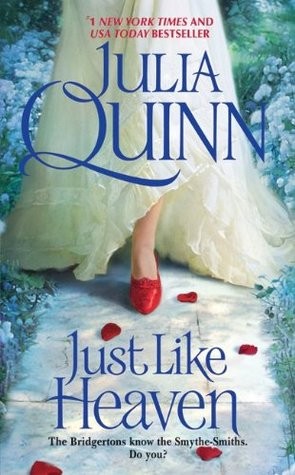
9. Just Like Heaven — Julia Quinn
Burn: Slow · Heat: Open door (mild) · Ending: HEA
Type: Regency romance · Tropes: friends to lovers, best friend’s sister, illness
Marcus has promised his best friend to watch over his sister Honoria — and has quietly loved her for years. When he falls dangerously ill, she nurses him, and long familiarity finally turns into something more.

10. The Sum of All Kisses — Julia Quinn
Burn: Slow · Heat: Open door · Ending: HEA
Type: Regency romance · Tropes: enemies-to-lovers, mathematician hero, wedding house party
Lady Sarah Pleinsworth blames Hugh Prentice — a brilliant mathematician injured in a duel — for ruining her social prospects. Two family weddings force them together until antagonism softens into respect.

11. Slightly Married — Mary Balogh
Burn: Slow · Heat: Open door · Ending: HEA
Type: Regency romance · Tropes: marriage of convenience, wartime promise, inheritance
Colonel Aidan Bedwyn keeps a promise to a dying officer by marrying his sister, a stranger, to protect her home. The arrangement becomes a careful relationship of duty, grief and choice.

12. Slightly Dangerous — Mary Balogh
Burn: Slow · Heat: Open door · Ending: HEA
Type: Regency romance · Tropes: icy duke, lively widow, opposites attract
The famously cold Duke of Bewcastle meets a cheerful widow at a house party and cannot stop thinking about her — though she wants nothing to do with him. A long collision of temperament and expectation.

13. Flowers from the Storm — Laura Kinsale
Burn: Slow · Heat: Open door · Ending: HEA
Type: Regency romance · Tropes: disability, Quaker heroine, marriage
A brilliant, rakish duke suffers a brain injury that leaves him unable to speak clearly and is locked away in an asylum — where a devout Quaker woman is the only one who understands him. A landmark of the genre.

14. Lord of Scoundrels — Loretta Chase
Burn: Slow · Heat: Open door · Ending: HEA
Type: Regency romance · Tropes: enemies-to-lovers, scandal, sharp heroine
A clever woman meets a notorious aristocrat and refuses to be intimidated by his reputation. Intelligence, conflict and the gradual realization that neither is what the other assumed.

15. Devil in Winter — Lisa Kleypas
Burn: Gentle · Heat: Explicit · Ending: HEA
Type: Regency romance · Tropes: marriage of convenience, wallflower, redemption
A shy heiress proposes a practical marriage to a notorious rake, creating a relationship built on changing trust. Check content notes for the hero’s behavior in the earlier Wallflowers book.

16. The Duchess Deal — Tessa Dare
Burn: Slow · Heat: Explicit · Ending: HEA
Type: Regency romance · Tropes: marriage of convenience, scarred hero, banter
A dressmaker and a scarred duke enter a practical marriage with rules neither expects to keep. Lighter in tone, with domestic proximity and gradual vulnerability.

17. A Wicked Kind of Husband — Mia Vincy
Burn: Slow · Heat: Explicit · Ending: HEA
Type: Regency romance · Tropes: marriage in trouble, estranged spouses
An estranged husband and wife are forced to present a united front in society. The slow burn comes from rebuilding a marriage that failed before the book begins.

18. The Madness of Lord Ian Mackenzie — Jennifer Ashley
Burn: Slow · Heat: Explicit · Ending: HEA
Type: Victorian romance · Tropes: neurodivergent duke’s brother, widow, Scotland
A widow meets Lord Ian Mackenzie, whose directness and difference have made society call him mad. The relationship progresses through respect, family pressure and careful understanding.

19. The Highwayman — Kerrigan Byrne
Burn: Slow · Heat: Explicit · Ending: HEA
Type: Victorian romance · Tropes: childhood connection, danger, revenge
A widow’s past connection with London’s most dangerous criminal resurfaces in a dark, high-emotion romance. Content notes: violence and trauma.

20. Bringing Down the Duke — Evie Dunmore
Burn: Slow · Heat: Open door · Ending: HEA
Type: Victorian romance · Tropes: suffragist heroine, class difference, politics
One of Oxford’s first women students campaigns for suffrage and keeps colliding with the powerful duke she needs to win over. Debate, respect and a genuine clash of values.

21. A Rogue of One’s Own — Evie Dunmore
Burn: Slow · Heat: Open door · Ending: HEA
Type: Victorian romance · Tropes: childhood rivals, publishing, reform politics
A suffragist buys influence over a publishing house and must work with the rakish antagonist from her past. Ideology and desire in constant tension.

22. Portrait of a Scotsman — Evie Dunmore
Burn: Slow · Heat: Open door · Ending: HEA
Type: Victorian romance · Tropes: marriage of convenience, class difference, Scotland
A banker’s daughter and a self-made Scottish financier enter a hasty marriage after a scandal. The relationship develops as both confront privilege, public image and what partnership means.

23. The Duke Who Didn’t — Courtney Milan
Burn: Slow · Heat: Open door · Ending: HEA
Type: Victorian romance · Tropes: childhood friends, family business, village
Chloe Fong is determined to launch her family’s sauce business; her childhood friend Jeremy is hiding a title. Shared history, humor and the work of building a life on one’s own terms.

24. The Devil Comes Courting — Courtney Milan
Burn: Slow · Heat: Open door · Ending: HEA
Type: Victorian romance · Tropes: inventor heroine, telegraphy, business rivals
A brilliant Chinese-born codemaker and a ruthless American businessman collide over a telegraph venture. Attraction grows through intellectual equality and hard-won trust.

25. Indigo — Beverly Jenkins
Burn: Slow · Heat: Open door · Ending: HEA
Type: Antebellum romance · Tropes: Underground Railroad, danger, freedom
In 1850s Michigan, a woman working on the Underground Railroad hides a wounded conductor known as the Black Daniel. Serious real-world stakes; content notes for racial violence.

26. The Bride Goes Rogue — Joanna Shupe
Burn: Gentle · Heat: Explicit · Ending: HEA
Type: Gilded Age romance · Tropes: arranged engagement, masquerade, opposites attract
Katherine Delafield wants nothing to do with the engagement her father arranged; tycoon Preston Clarke refuses to honor it either. Then they meet at a masquerade, and both start to reconsider.

27. The Siren of Sussex — Mimi Matthews
Burn: Slow · Heat: Closed door · Ending: HEA
Type: Victorian romance · Tropes: fashion, class, ambition
A daring horsewoman and the half-Indian tailor who designs her riding habits challenge Victorian society together. A clean, character-led slow burn.

28. The Lady’s Guide to Celestial Mechanics — Olivia Waite
Burn: Slow · Heat: Explicit · Ending: HEA
Type: Regency romance (F/F) · Tropes: women in science, widow, class difference
A woman recovering from a broken heart takes work illustrating a widowed countess’s astronomy translation. Their connection grows through intellectual collaboration and careful trust.

29. The Care and Feeding of Waspish Widows — Olivia Waite
Burn: Slow · Heat: Open door · Ending: HEA
Type: Georgian romance (F/F) · Tropes: widows, beekeeper, printer, community
A printer and a beekeeper become close when a seditious pamphlet threatens their town. A tender story about independence, community and wanting a different life.

30. The Hellion’s Waltz — Olivia Waite
Burn: Slow · Heat: Explicit · Ending: HEA
Type: Regency romance (F/F) · Tropes: musician, weaver, con artist heroine
A piano teacher with a talent for swindles and a weaver who despises con artists find themselves on the same side against a crooked businessman. Art, work and respect for each other’s ambitions.

31. The Perks of Loving a Wallflower — Erica Ridley
Burn: Slow · Heat: Open door · Ending: HEA
Type: Regency romance (F/F) · Tropes: secret identity, wallflower, found family
A shy bluestocking heiress and a bold master of disguise are drawn together in a Regency world where reputation matters. Mystery, confidence-building and growing trust.

32. A Restless Truth — Freya Marske
Burn: Slow · Heat: Explicit · Ending: HEA
Type: Edwardian fantasy romance (F/F) · Tropes: haunted ship, mystery, magic
Two women uncover magical secrets aboard an Atlantic crossing while their attraction moves from wary fascination toward partnership. Book two of the Last Binding; readable on its own.

33. A Lady for a Duke — Alexis Hall
Burn: Slow · Heat: Explicit · Ending: HEA
Type: Regency romance · Tropes: trans heroine, childhood friends, second chance
A grieving duke reconnects with the woman he believed died at Waterloo — who has finally been able to live as herself. Identity, friendship and whether an old bond can become a shared future.

34. A Marvellous Light — Freya Marske
Burn: Slow · Heat: Explicit · Ending: HFN — trilogy
Type: Edwardian fantasy romance (M/M) · Tropes: magic, curse, forced partnership
A civil servant stumbles into Edwardian England’s hidden magical world and must work with a prickly magician to survive its dangers. The trilogy continues with new couples and concludes in A Power Unbound.

35. The Queer Principles of Kit Webb — Cat Sebastian
Burn: Slow · Heat: Open door · Ending: HEA
Type: Georgian romance (M/M) · Tropes: retired highwayman, aristocrat, heist
A retired highwayman is drawn back toward danger by an aristocrat who wants to learn the trade. The adventure provides pace; the slow-building relationship is the heart.

36. We Could Be So Good — Cat Sebastian
Burn: Slow · Heat: Open door · Ending: HEA
Type: 1950s historical romance (M/M) · Tropes: newsroom, roommates, friends to lovers
A scrappy reporter and the newspaper owner’s son become friends, then roommates, in 1950s New York, where openness carries real risk. Gentle, domestic and romance-first.

37. Band Sinister — K.J. Charles
Burn: Slow · Heat: Explicit · Ending: HEA
Type: Regency romance (M/M) · Tropes: country house, found family, bookish hero
A conventional young man is stranded with his scandalous neighbor and a witty circle of freethinkers. The romance grows through safety, friendship and self-knowledge.

38. An Unseen Attraction — K.J. Charles
Burn: Slow · Heat: Explicit · Ending: HEA — mystery continues in the trilogy
Type: Victorian romance (M/M) · Tropes: boarding house, mystery, class
A boarding-house keeper and the taxidermist who lodges with him are drawn into a murder in working-class London. Daily proximity, historical atmosphere and a romantic suspense thread.
How to Choose a Historical Slow Burn
| If you are craving… | Choose… | Avoid if… |
|---|---|---|
| Marriage of convenience | A Civil Contract; Slightly Married; Devil in Winter | You want instant devotion |
| Classic restraint | Pride and Prejudice; Persuasion; North and South | You want on-page heat |
| Regency wit and manners | Frederica; Venetia; The Sum of All Kisses | You prefer high-action plots |
| Politics and reform | Bringing Down the Duke; A Rogue of One’s Own; Indigo | You want history only as a backdrop |
| Sapphic historical romance | The Lady’s Guide to Celestial Mechanics; The Hellion’s Waltz; The Perks of Loving a Wallflower | You want only M/F pairings |
| M/M historical romance | A Marvellous Light; The Queer Principles of Kit Webb; Band Sinister | You need closed-door romance |
| High heat | The Duchess Deal; The Madness of Lord Ian Mackenzie; The Bride Goes Rogue | You prefer closed-door romance |
| Quiet emotional intimacy | A Civil Contract; The Care and Feeding of Waspish Widows; We Could Be So Good | You need a fast-paced plot |
Frequently Asked Questions
What is slow burn historical romance?
A historical romance where emotional intimacy develops gradually before the couple commits. Period barriers — class, inheritance, reputation, marriage law, race, gender expectations or war — make trust and choice central to the romantic arc.
Are all books on this page romance-first?
Almost all. Every pick centers a couple and ends HEA or HFN. The four classics — Pride and Prejudice, Persuasion, North and South and Jane Eyre — predate the modern romance genre but are built around their love stories.
Which books are good for marriage of convenience?
A Civil Contract for restrained Regency emotional growth, Slightly Married for a duty-driven arrangement, Devil in Winter for a rake and a wallflower, or Portrait of a Scotsman for Victorian class and politics.
Which books have sapphic historical slow burn?
The Lady’s Guide to Celestial Mechanics, The Care and Feeding of Waspish Widows, The Hellion’s Waltz, The Perks of Loving a Wallflower and A Restless Truth. See Slow Burn Sapphic Romance and our sister site’s historical sapphic list.
Which books have M/M historical slow burn?
A Marvellous Light, The Queer Principles of Kit Webb, We Could Be So Good, Band Sinister and An Unseen Attraction — different levels of heat, danger and historical constraint.
How spicy are historical slow burns?
Pacing and heat are separate. Georgette Heyer, the classics and The Siren of Sussex are closed door; Julia Quinn, Mary Balogh and Evie Dunmore are open door; Freya Marske, Alexis Hall, K.J. Charles, Lisa Kleypas and Joanna Shupe are explicit.
What is the difference between historical romance and historical fiction with romance?
Historical romance makes the love story the main narrative engine and promises an emotionally satisfying ending. Historical fiction may include a major romance but prioritize a character’s life, war, politics or tragedy instead.
What if I want minimal external plot?
Choose character-driven titles such as A Civil Contract, Venetia, Frederica, Just Like Heaven or The Care and Feeding of Waspish Widows. For more plot pressure, try Freya Marske, K.J. Charles or Evie Dunmore.
Do I need to read series in order?
Most series here follow a new couple each book, so you can start anywhere. Read the Last Binding books (A Marvellous Light, A Restless Truth, A Power Unbound) in order for the full magical plot.
What content notes should I check?
Check for historical prejudice, class-based power imbalance, colonialism, war violence, grief, homophobia or transphobia, and coercion. The Duke and I has a well-known consent issue; Indigo depicts racial violence.
What is a good first historical slow burn?
For closed door, A Civil Contract or Pride and Prejudice. For feminist Victorian tension, Bringing Down the Duke. For queer romance, The Lady’s Guide to Celestial Mechanics or A Marvellous Light.
Which historical slow burns are friends to lovers?
Just Like Heaven, We Could Be So Good, The Duke Who Didn’t and A Lady for a Duke. See Slow Burn Friends-to-Lovers Romance.
Explore Related Slow Burn Categories
- Slow Burn Contemporary Romance
- Slow Burn Fantasy Romance
- Slow Burn Paranormal Romance
- Slow Burn Mystery and Romantic Suspense
- Slow Burn Regency Romance
- Slow Burn Marriage-of-Convenience Romance
- Slow Burn Sapphic Romance
- Slow Burn Friends-to-Lovers Romance
- Slow Burn Enemies-to-Lovers Romance
- Slow Burn Romance With HEA
- Slow Burn Trans Romance
- Slow Burn Disabled Romance
How We Label Books
Burn speed, heat and ending are separate labels. Burn speed describes how long the relationship takes to resolve; heat describes on-page intimacy; ending distinguishes HEA, HFN and series outcomes.
Sources consulted for this guide include Lesbian Romance Reads, Marie Claire, Ember Novels and The Book Catapult.