Home › Slow Burn Romance › Sci-Fi Romance
Slow Burn Sci-Fi Romance Books
Space Missions, Future Worlds, Artificial Intelligence, Alien Cultures, and Interstellar Connection
Slow burn sci-fi romance turns distance into a love language. A relationship can grow during a months-long voyage, inside a cramped spacecraft, across a hostile planet, through messages delayed by light-years, or between people separated by species, class, citizenship, time, or even the line between human and artificial intelligence.
Science fiction gives romantic tension a different kind of pressure. A mission can demand professional restraint. An alien culture can make every gesture hard to interpret. A future government can control bodies, identities, travel, or memory. An AI can make a character question what consciousness, loyalty, and intimacy mean. The relationship becomes slow because learning another person may also mean learning an entire world.
This guide includes space opera, alien romance, military and mission-based stories, time travel, artificial intelligence, dystopian futures, and sapphic and queer science fiction. Each pick lists burn speed, heat and ending — including whether it is romance-first or a science-fiction story with a romantic thread.
Quick start
Start Here: Choose Your Sci-Fi Slow Burn
| If you want… | Start with… | Why it fits |
|---|---|---|
| Sapphic yearning across time | This Is How You Lose the Time War — Amal El-Mohtar & Max Gladstone | Rival agents, letters and lyrical F/F connection |
| Crash landing and survival | These Broken Stars — Amie Kaufman & Meagan Spooner | Forced proximity and distrust becoming reliance |
| Romance-first space adventure | Polaris Rising — Jessie Mihalik | Escaped prisoners, conspiracy, open-door payoff |
| Arranged marriage in space | Winter’s Orbit — Everina Maxwell | Political intrigue and two men who misread each other |
| A YA series-long burn | Cinder — Marissa Meyer | Cyborg Cinderella and a romance across four books |
| Gentle AI and F/F romance | The Cybernetic Tea Shop — Meredith Katz | Tea, grief and a quiet, domestic build |
| Found family on a lived-in ship | The Long Way to a Small, Angry Planet — Becky Chambers | Community-first sci-fi with queer romance threads |
| Political murder mystery in space | A Memory Called Empire — Arkady Martine | Intrigue, empire and a subtle queer thread |
What Makes Sci-Fi Slow Burn Different?
Sci-fi slow burn often begins with translation. Characters may not share a language, a biology, a culture, a lifespan, or even a common understanding of what love means. A human and alien must learn each other’s customs. Two officers must decide whether duty permits intimacy. A person and an AI must decide whether recognition is enough to become attachment. Those questions make emotional trust as important as physical attraction.
The strongest science-fiction romances make the speculative premise affect the relationship. A time war changes how characters reach each other. A spaceship’s isolation makes small acts of care enormous. An empire’s politics can make a relationship dangerous. A future technology can preserve, alter, or erase the evidence of love. The future is not just decoration; it gives the slow burn its particular shape.
The Best Sci-Fi Slow Burn Setups
| Setup | Why it works | Try |
|---|---|---|
| Space mission | Close quarters, duty and survival make every relationship choice consequential. | Illuminae; Skyward |
| Alien culture | Difference requires translation, patience and consent-aware discovery. | Light from Uncommon Stars; Homebound |
| Artificial intelligence | Connection challenges assumptions about consciousness and personhood. | The Cybernetic Tea Shop; The Stars Too Fondly |
| Time travel | Memory and timing become literal obstacles to a shared future. | This Is How You Lose the Time War |
| Interstellar politics | Duty, empire and diplomacy turn attraction into risk. | Winter’s Orbit; A Memory Called Empire |
| Crash and survival | External threat creates reliance while raising questions about freedom and trust. | These Broken Stars; Shards of Honour |
The list
Our Slow Burn Sci-Fi Romance Picks

1. This Is How You Lose the Time War — Amal El-Mohtar & Max Gladstone
Burn: Very slow · Heat: Sweet · Ending: Hopeful
Type: Time-travel novella (F/F) · Tropes: rival agents, letters, enemies-to-lovers
Two agents on opposite sides of a war fought across time leave each other letters that become a relationship. Concentrated and lyrical: every message is both a risk and an act of recognition.

2. The Long Way to a Small, Angry Planet — Becky Chambers
Burn: Romance thread · Heat: Closed door · Ending: HFN — linked standalones follow
Type: Space opera · Tropes: found family, spaceship crew, queer ensemble
A mixed-species crew tunnels wormholes across a richly imagined galaxy. Romance is one meaningful thread among many — choose it for found family and queer community rather than a single romance-first arc.

3. These Broken Stars — Amie Kaufman & Meagan Spooner
Burn: Slow · Heat: Sweet · Ending: HEA
Type: YA space opera · Tropes: crash landing, forced proximity, class difference
A wealthy heiress and a war-hero soldier survive a starship crash on an uninhabited planet. Their class differences and survival needs make trust a hard-won process. The Starbound companions This Shattered World and Their Fractured Light follow new couples.

4. Cinder — Marissa Meyer
Burn: Series-long · Heat: Sweet · Ending: Series — HEA by book 4
Type: YA science-fiction fairy tale · Tropes: Cinderella retelling, cyborg, prince, plague
A cyborg mechanic in New Beijing crosses paths with Prince Kai as a plague spreads and a hostile Lunar queen circles Earth. The romance unfolds across the Lunar Chronicles, which ends in Winter.

5. Skyward — Brandon Sanderson
Burn: Series-long · Heat: Sweet · Ending: Series complete — HEA
Type: YA military sci-fi · Tropes: pilot academy, rivals, found family
A defiant girl fights her way into flight school on a besieged planet and clashes with the by-the-book squad leader. Their rivalry turns to respect and then more across the completed Skyward Flight series.

6. Illuminae — Amie Kaufman & Jay Kristoff
Burn: Slow · Heat: Sweet · Ending: Trilogy — HEA
Type: YA space thriller (epistolary) · Tropes: exes, second chance, AI, survival
Kady and Ezra break up the morning their planet is invaded, then have to work together across two fleeing ships. Told through emails, chat logs and files, with an AI that steals every scene.
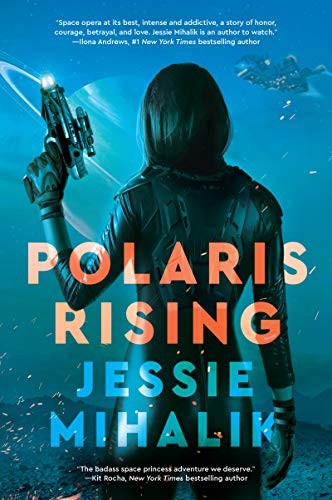
7. Polaris Rising — Jessie Mihalik
Burn: Slow · Heat: Open door · Ending: HEA — trilogy follows her sisters
Type: Space opera romance · Tropes: escaped prisoner, outlaw soldier, only one bed
A runaway heir and a notorious soldier escape captivity together and uncover a conspiracy — pitched as “Han and Leia for grown-ups.” Romance-forward and action-heavy. Content notes: violence, torture, kidnapping.

8. Winter’s Orbit — Everina Maxwell
Burn: Slow · Heat: Closed door · Ending: HEA
Type: Space opera romance (M/M) · Tropes: arranged marriage, political intrigue, grumpy/sunshine
A minor prince is married to the widower of his murdered cousin to preserve an interplanetary treaty. Both men assume the other doesn’t want them. Companion novel Ocean’s Echo follows a new couple.
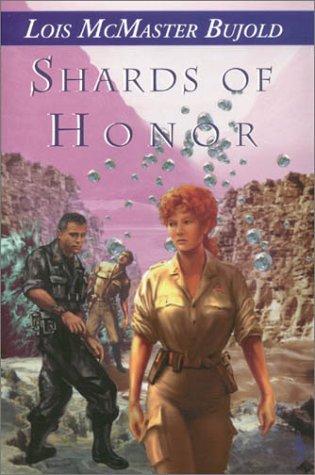
9. Shards of Honour — Lois McMaster Bujold
Burn: Slow · Heat: Closed door · Ending: HEA — story continues in Barrayar
Type: Military space opera · Tropes: enemies-to-allies, survival, political conflict
A survey captain and an enemy commander are stranded together on a hostile planet. Respect grows through survival and moral conflict in the opening book of the Vorkosigan Saga.

10. The Stars Too Fondly — Emily Hamilton
Burn: Slow · Heat: Closed door · Ending: HEA
Type: Sapphic space rom-com · Tropes: found family, hologram captain, rivals to lovers
Four friends accidentally steal a spaceship while investigating its crew’s disappearance twenty years earlier — and its holographic captain has the face and attitude of the woman who vanished. Part space odyssey, part sapphic rom-com.
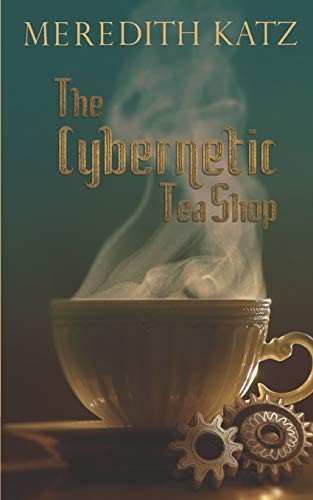
11. The Cybernetic Tea Shop — Meredith Katz
Burn: Slow · Heat: Sweet · Ending: HEA
Type: Cozy sci-fi novella (F/F) · Tropes: AI/human, tea shop, grief
A wandering repair technician and the AI who runs a tea shop form a quiet relationship in a world wary of artificial intelligence. Short, gentle and domestic.

12. Light from Uncommon Stars — Ryka Aoki
Burn: Slow · Heat: Closed door · Ending: HEA
Type: Sci-fi/fantasy blend (F/F) · Tropes: alien starship captain, music, found family
A violin teacher who has bargained with a demon falls for a donut-shop owner who is secretly an alien starship captain in hiding. The romance is tender and central. Content notes: abuse, transphobia, sexual assault, self-harm.

13. The Mimicking of Known Successes — Malka Older
Burn: Slow · Heat: Closed door · Ending: HFN — series continues
Type: Sapphic sci-fi mystery · Tropes: Holmes-inspired detective, exes, gas-giant colony
A detective investigating a disappearance on a Jupiter colony reconnects with her academic ex. A compact F/F arc inside a mystery and a distinctive future setting.

14. The Space Between Worlds — Micaiah Johnson
Burn: Romance thread · Heat: Closed door · Ending: HFN
Type: Multiverse science fiction · Tropes: parallel worlds, class, F/F relationship thread
A woman travels between parallel worlds where most versions of herself have died. The F/F connection is important, but the book is science-fiction-first.

15. The Darkness Outside Us — Eliot Schrefer
Burn: Slow · Heat: Sweet · Ending: Hopeful — twist-heavy
Type: YA space survival (M/M) · Tropes: isolation, rivals to lovers, mystery
Two boys from rival nations wake on a spaceship with missing memories and a mission they do not understand. Their bond grows through isolation and suspicion; the ending is not a conventional HEA.
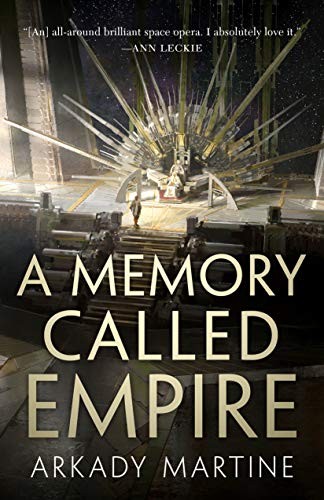
16. A Memory Called Empire — Arkady Martine
Burn: Romance thread · Heat: Closed door · Ending: Duology — open-ended
Type: Political space opera · Tropes: murder mystery, empire, cultural identity
An ambassador investigates her predecessor’s death inside a vast empire, guided by a sharp cultural liaison. A meaningful queer connection that develops in A Desolation Called Peace but never becomes a conventional romance.

17. The Blighted Stars — Megan E. O’Keefe
Burn: Slow · Heat: Closed door · Ending: Trilogy complete
Type: Space opera / corporate thriller · Tropes: enemies-to-allies, survival, conspiracy
A revolutionary spy and the heir of the corporation she is fighting crash-land together on a dying planet. A tense adult relationship thread inside a mystery-and-survival plot; book one ends on a cliffhanger.

18. The Host — Stephenie Meyer
Burn: Slow · Heat: Closed door · Ending: Hopeful
Type: Alien possession romance · Tropes: body sharing, love triangle, identity
An alien consciousness inhabits a human body and falls for the people the body once loved. Romance and identity are inseparable; the premise raises body-autonomy questions some readers will not enjoy.

19. Homebound — Lydia Hope
Burn: Slow · Heat: Open door (warm) · Ending: HEA
Type: Dystopian alien romance · Tropes: alien prisoner, caregiver, slow trust
In a corrupt prison city, a cleaner is reassigned to nurse a dying alien prisoner back to health. The relationship builds through care in a brutal setting. Content notes: captivity, violence; some reviewers flag ableist commentary.

20. The Last Hour of Gann — R. Lee Smith
Burn: Very slow · Heat: Explicit · Ending: HEA
Type: Alien survival romance · Tropes: human/alien, crash survival, enemies-to-allies
A crash survivor and an alien priest travel together across a hostile planet. Very long and very dark, with graphic sexual violence and gore. Read the content notes first.
How to Choose a Sci-Fi Slow Burn
| If you are craving… | Choose… | Avoid if… |
|---|---|---|
| Found family and gentle space life | The Long Way to a Small, Angry Planet; The Cybernetic Tea Shop; Light from Uncommon Stars | You need a fast, central romance |
| Sapphic science fiction | This Is How You Lose the Time War; The Stars Too Fondly; The Mimicking of Known Successes | You want only M/F pairings |
| Crash landing and survival | These Broken Stars; Shards of Honour; The Blighted Stars | You need a low-stress read |
| YA series romance | Cinder; Skyward; Illuminae | You want adult heat |
| Political space opera | Winter’s Orbit; A Memory Called Empire; Polaris Rising | You prefer books with no politics |
| Aliens and hard choices | The Host; Homebound; The Last Hour of Gann | You dislike body-autonomy or captivity themes |
| Dark, high-heat alien survival | The Last Hour of Gann | You want no sexual violence or graphic content |
Frequently Asked Questions
What is slow burn sci-fi romance?
It is romance set in a speculative future where emotional or physical intimacy develops gradually. Space travel, alien culture, artificial intelligence, mission duty, politics, time or survival make trust and communication part of the romantic journey.
Can sci-fi slow burn romance be spicy?
Yes. Slow burn describes pace, not heat. The Cybernetic Tea Shop, Cinder and Skyward stay sweet; Polaris Rising is open door; The Last Hour of Gann is explicit and very dark.
Do sci-fi romances always have HEA endings?
No. Romance-first sci-fi usually aims for HEA or HFN, but space opera, literary sci-fi and ongoing series may prioritize plot or end ambiguously. Every entry here lists its ending and series status.
Which books are best for sapphic sci-fi slow burn?
Start with This Is How You Lose the Time War for lyrical rivals-to-lovers, Light from Uncommon Stars for a tender central romance, The Cybernetic Tea Shop for gentle AI/human F/F, The Stars Too Fondly for space adventure, or The Mimicking of Known Successes for exes solving a mystery. See Slow Burn Sapphic Romance.
What if I want romance-first sci-fi rather than a romance subplot?
Polaris Rising, Winter’s Orbit, These Broken Stars, Light from Uncommon Stars and The Cybernetic Tea Shop put the relationship first. The Becky Chambers and Arkady Martine books are science-fiction-first with meaningful relationship threads.
Are alien romances always dark or explicit?
No. Light from Uncommon Stars and The Host are closed door, while Homebound and The Last Hour of Gann are darker adult alien romances. Check tone, content notes and heat separately.
What does AI romance mean?
A relationship involving artificial intelligence, a robot or a synthetic being. The strongest stories, like The Cybernetic Tea Shop, treat personhood, consent and agency as core questions rather than using AI as a gimmick.
Which books work for readers who want found family?
The Long Way to a Small, Angry Planet, The Stars Too Fondly, Skyward and Light from Uncommon Stars are strong crew- or community-focused picks.
What if I do not want a series cliffhanger?
Choose a standalone or completed arc: This Is How You Lose the Time War, The Cybernetic Tea Shop, Winter’s Orbit, Light from Uncommon Stars, These Broken Stars and Polaris Rising all resolve their central couple in one book.
What content notes should I check in sci-fi romance?
Check for captivity, body autonomy, colonialism, war violence, death, trauma, coercion, medical experimentation, reproductive themes and power imbalance. In alien romance, check how consent and biological difference are handled.
What is the difference between space opera and sci-fi romance?
Space opera is a broad, often political or action-driven science-fiction mode. Sci-fi romance makes the relationship a main narrative engine. A book can be both, but a space opera may give romance less page time than a romance reader expects.
Why include books where romance is not central?
Readers searching for slow burn sci-fi often want emotional connection inside a larger speculative story. Entries labeled “Romance thread” are science-fiction-first so you can choose intentionally.
Explore Related Slow Burn Categories
- Slow Burn Fantasy Romance
- Slow Burn Paranormal Romance
- Slow Burn Space Opera Romance
- Slow Burn Alien Romance
- Slow Burn AI Romance
- Slow Burn Time-Travel Romance
- Slow Burn Sapphic Romance
- Slow Burn Enemies-to-Lovers Romance
- Slow Burn Romance With HEA
- Explicit Slow Burn Romance
How We Label Books
Burn speed, heat and ending are separate labels. Burn speed describes how long the relationship takes to resolve; “Romance thread” marks science-fiction-first books with a significant relationship. Heat describes on-page intimacy, and ending distinguishes HEA, HFN, hopeful, open-ended and series outcomes.
Sources consulted for this guide include All About Romance, MoodReads, The Lesbrary, and r/QueerSFF.